Micro vs Macro Influencers: Which Delivers Better ROI?
 Mohit Kumar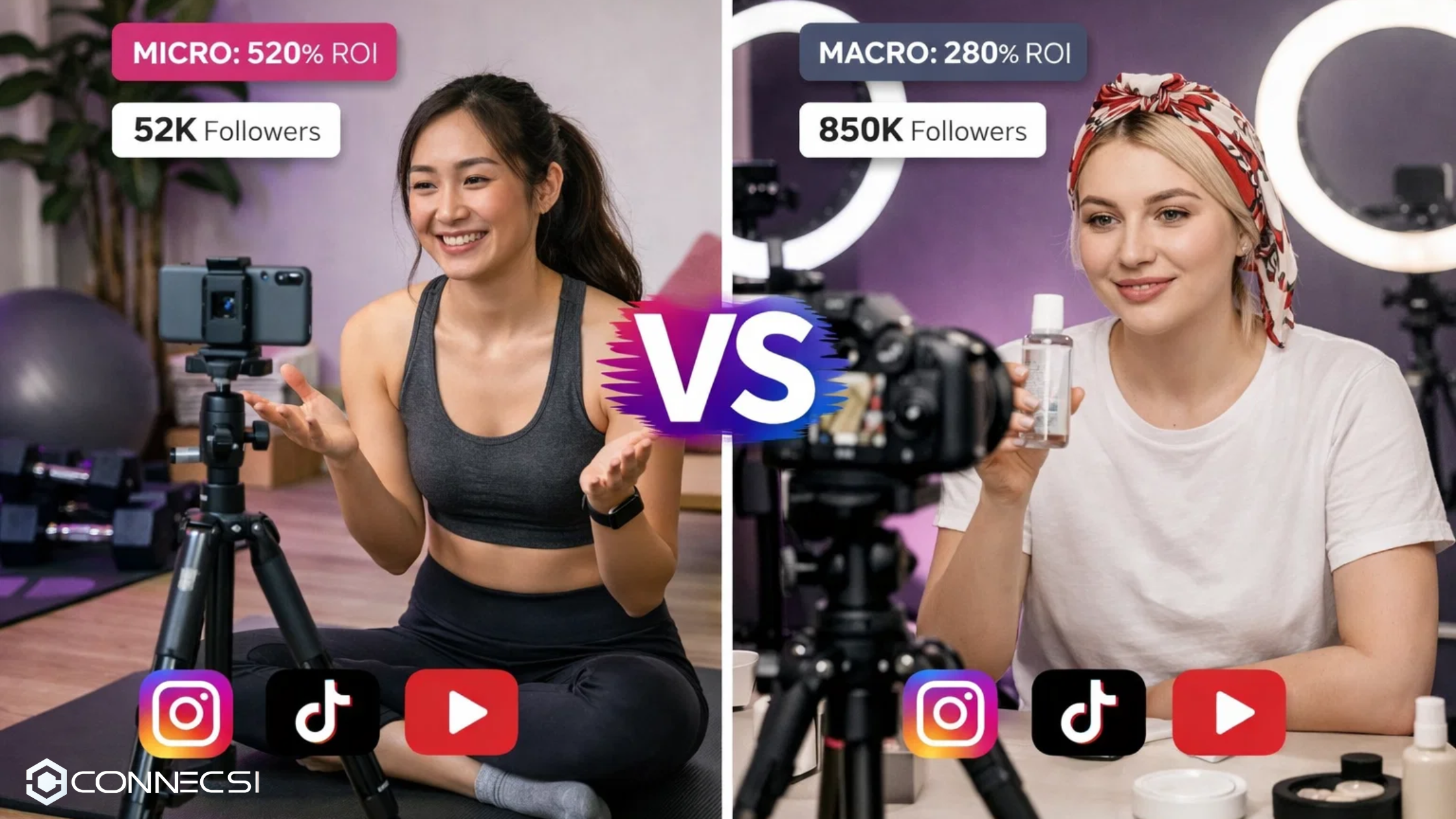
On this page
- Introduction
- Pro Tip
- Defining Micro Influencers vs Macro Influencers
- Engagement Rate Comparison: The Numbers Don't Lie
- Cost-Effectiveness and Budget Efficiency
- Audience Quality and Targeting Precision
- Content Authenticity and Creative Control
- Campaign Scalability and Risk Diversification
- Platform-Specific Considerations
- When to Choose Micro Influencers
- When to Choose Macro Influencers
- The Hybrid Strategy: Best of Both Worlds
- ROI Measurement: The Ultimate Comparison
- Key Takeaways
- Conclusion
The debate between micro vs macro influencers represents one of the most critical strategic decisions brands face when allocating influencer marketing budgets. Should you invest $10,000 in a single macro influencer with 500,000 followers, or distribute that same budget across 10-15 micro influencers with 30,000-50,000 followers each? The answer isn't one-size-fits-all, but data from 2026 increasingly favors micro influencers for most campaign objectives—particularly when ROI, engagement quality, and conversion rates take priority over raw impressions.
According to Oberlo's influencer marketing research, micro influencers deliver 60% higher engagement rates and 22.2% more conversions per week compared to macro influencers, despite having significantly smaller audiences. Meanwhile, 70% of brands now prefer working with micro influencers over larger creators, citing better authenticity, audience trust, and measurable business outcomes as primary reasons for this shift.
This comprehensive comparison examines micro versus macro influencers across every dimension that matters: engagement rates, cost-effectiveness, audience quality, content authenticity, campaign scalability, and long-term partnership potential. Whether you're planning your first influencer campaign or optimizing an established program, understanding these differences ensures you choose the influencer tier that aligns with your specific goals, budget constraints, and success metrics.
The micro vs macro decision shouldn't be either/or. Many successful brands use a pyramid strategy: 1-2 macro influencers for top-of-funnel awareness, complemented by 10-20 micro influencers for mid-funnel consideration and bottom-funnel conversion. This hybrid approach captures both reach and engagement while diversifying risk across multiple creator partnerships.
Defining Micro Influencers vs Macro Influencers
Before comparing performance metrics, let's establish clear definitions. Understanding what micro influencers are provides essential context for this comparison.
Micro influencers have follower counts between 10,000 and 100,000 across platforms like Instagram, TikTok, YouTube, or LinkedIn. They've built audiences around specific niches—sustainable fashion, budget travel, tech reviews for small businesses, plant-based nutrition, or strength training for women over 40. Their content demonstrates subject matter expertise, and their followers engage actively through comments, shares, and genuine conversations rather than passive scrolling.
Macro influencers have follower counts between 100,000 and 1 million. They occupy the tier between micro influencers and celebrity mega influencers (those with 1 million+ followers). Macro influencers have achieved significant platform presence, often work with management agencies, and command substantially higher fees than micro creators. Their audiences are broader and less niche-focused than micro influencer communities.
The distinction matters because these different scales create fundamentally different dynamics in audience relationships, content creation approaches, and partnership economics.
Engagement Rate Comparison: The Numbers Don't Lie
Engagement rate—the percentage of followers who actively interact with content through likes, comments, shares, and saves—serves as the single most important performance differentiator between micro and macro influencers.
Research from Later's Instagram influencer analysis reveals striking patterns:
Micro influencers (10K-100K followers): Average 8-10% engagement rate on Instagram, with top performers reaching 12-15%. On TikTok, micro creators average 9-11% engagement, and on YouTube, they see 3-5% engagement (higher than other tiers due to longer content consumption).
Macro influencers (100K-1M followers): Average 2-4% engagement rate on Instagram, 3-5% on TikTok, and 1-2% on YouTube. The engagement drop-off as follower counts increase is consistent across all major platforms.
This means a micro influencer with 30,000 followers averaging 10% engagement generates approximately 3,000 likes, comments, and shares per post. A macro influencer with 300,000 followers at 3% engagement generates 9,000 interactions—three times as many in absolute numbers but requiring ten times the audience to achieve it. When calculated on a per-follower basis, micro influencer content receives 3.3x more engagement than macro influencer content.
Why does this engagement gap exist? Micro influencers maintain genuine relationships with their communities. They respond to comments personally, recognize regular followers by name, and create content addressing specific audience questions and interests. Macro influencers, by contrast, cannot feasibly maintain personal relationships with hundreds of thousands of followers, creating more transactional, one-directional content dynamics.
Cost-Effectiveness and Budget Efficiency
Understanding typical micro influencer pricing versus macro rates reveals dramatic cost differences that impact campaign scale and ROI.
Micro influencer costs: Instagram posts range from $200-$800 for creators with 10K-50K followers and $800-$2,000 for those with 50K-100K followers. TikTok videos cost $150-$600 and $600-$1,500 respectively. YouTube integrations run $500-$1,500 and $1,500-$3,000.
Macro influencer costs: Instagram posts from creators with 100K-500K followers typically cost $2,500-$10,000, while those with 500K-1M followers charge $10,000-$25,000. TikTok videos range from $2,000-$8,000 and $8,000-$20,000. YouTube sponsorships cost $5,000-$20,000 and $20,000-$50,000 respectively.
These pricing differences create dramatically different campaign possibilities. A $10,000 budget buys one post from a mid-tier macro influencer or comprehensive campaigns with 10-15 micro influencers across multiple platforms, content types, and audience segments.
| Metric | Micro Influencers (10K-100K) | Macro Influencers (100K-1M) |
|---|---|---|
| Engagement Rate | 8-10% (Instagram) | 2-4% (Instagram) |
| Cost Per Post | $200-$2,000 | $2,500-$25,000 |
| Cost Per Engagement | $0.05-$0.15 | $0.25-$0.75 |
| Conversion Rate | 3-5% | 1-2% |
| Audience Trust | Very High | Moderate |
| Niche Specificity | Highly Focused | Broad Appeal |
The cost-per-engagement calculation reveals the efficiency gap. If a micro influencer charges $500 for a post generating 3,000 engagements, the cost per engagement is $0.17. A macro influencer charging $10,000 for a post generating 15,000 engagements costs $0.67 per engagement—nearly four times more expensive for the same metric.
For brands prioritizing measurable outcomes over vanity metrics, micro influencers deliver superior cost efficiency across nearly every performance indicator.
Audience Quality and Targeting Precision
Follower count says nothing about audience quality, demographics, or purchase intent. Micro and macro influencers attract fundamentally different audience compositions.
Micro influencer audiences are highly qualified and niche-specific. A micro influencer focused on "sustainable fashion for professionals" attracts followers genuinely interested in that exact intersection. Their audience likely includes 25-40 year old working women with disposable income, environmental values, and active shopping intent in that category. This targeting precision means brand partnerships reach exactly the right people.
Macro influencer audiences are broader and more diverse. A general fashion macro influencer attracts followers across age ranges, income levels, and interest areas. While total reach is higher, the percentage of followers who match any specific brand's target customer profile is lower. You're paying for massive reach to audiences where only 10-30% might actually care about your specific product category.
Audience authenticity also differs significantly. According to Influencer Marketing Hub's benchmark data, fake followers and bot engagement remain among the most common quality issues in influencer marketing, and the incentive to artificially inflate numbers tends to grow as follower counts approach monetization thresholds. Micro influencers with 30,000 authentic followers deliver more value than macro influencers with 300,000 followers where 20-30% are bots or inactive accounts.
Geographic and demographic targeting precision also favors micro influencers. Local micro influencers serve specific cities or regions perfectly—a San Francisco food micro influencer reaches people who can actually visit featured restaurants. Macro influencers have national or international audiences where geographic targeting becomes diluted.
Content Authenticity and Creative Control
Content quality and authenticity differ substantially between micro and macro influencer partnerships, impacting audience reception and brand safety.
Micro influencers typically maintain full creative control and produce content that aligns naturally with their existing style. They integrate brand partnerships seamlessly into their content flow because they only work with brands they genuinely use or believe in. Their content feels authentic because it is authentic—they're sharing real experiences with products they've actually tried and evaluated.
Micro influencers also communicate directly with brands without agency intermediaries, enabling collaborative creative development and iterative feedback. This direct relationship produces content that balances brand messaging with creator authenticity more effectively.
Macro influencers often work through management agencies and have formalized content approval processes. Their sponsored content can feel more polished but less personal, as they balance multiple brand partnerships simultaneously. The sheer volume of sponsorships some macro influencers accept (sometimes 15-20 different brands monthly) dilutes authenticity and makes followers skeptical of recommendations.
Brand safety considerations also differ. Micro influencers typically have cleaner content histories that are easier to audit. Macro influencers' extensive content archives and higher public profiles create more potential for controversial past statements or associations that could impact brand reputation.
Campaign Scalability and Risk Diversification
Strategic campaign architecture looks different when building around micro versus macro influencers.
Micro influencer campaigns enable natural scalability and risk diversification. Starting with 5 micro influencers allows testing different creators, content approaches, and audience segments with limited budget exposure. Strong performers can be expanded into long-term ambassadors while underperformers are simply not renewed—no major budget impact. You can easily scale from 5 to 20 micro influencers as results prove out, building a distributed network of authentic advocates.
Multi-creator micro strategies also create consistent brand presence. Rather than one macro influencer posting once, 10 micro influencers posting throughout a month create 10 distinct touchpoints, keeping your brand visible across different audience segments and geographic markets.
Macro influencer campaigns concentrate risk. If you invest $20,000 in a single macro influencer post that underperforms—low engagement, minimal conversions, or worse, creator controversy shortly after posting—you've lost significant budget with limited recourse. Macro partnerships also create dependency; if your primary macro influencer becomes unavailable or declines renewal, replacing them requires finding another high-reach creator and starting relationship building from scratch.
Content longevity considerations also favor distributed micro approaches. Macro influencer posts get buried quickly in high-velocity feeds. Ten micro influencer posts over 2-4 weeks create sustained visibility as different creators' audiences discover content at different times.
Platform-Specific Considerations
The micro versus macro decision varies somewhat by platform due to algorithm behaviors and user consumption patterns.
Instagram: Favors micro influencers due to chronological feed disappearance and explore page algorithmic discovery. High engagement rates signal quality content to Instagram's algorithm, helping micro influencer posts reach beyond their follower base through explore placement. Macro influencers' lower engagement rates limit algorithmic amplification.
TikTok: The ultimate equalizer where micro and macro differences matter least. TikTok's For You Page algorithm can make any video—regardless of creator size—go viral based on engagement velocity and watch time. Micro creators regularly outperform macro creators when content resonates. However, macro creators have advantage in predictable reach; their established audiences provide baseline views even if algorithmic promotion doesn't materialize.
YouTube: Favors macro influencers more than other platforms. YouTube's recommendation algorithm rewards watch time and subscriber loyalty, giving established macro creators advantages. However, micro influencers in specific niches can still outperform through high audience relevance and superior retention rates.
LinkedIn: Strongly favors micro influencers (termed "thought leaders" in B2B contexts). LinkedIn's professional network rewards expertise and meaningful conversation over vanity metrics. A B2B micro influencer with 15,000 highly targeted connections in enterprise IT delivers better results than a general business macro influencer with 500,000 followers.
When to Choose Micro Influencers
Micro influencers are the optimal choice when:
Budget is limited: Campaigns under $15,000 typically achieve better results distributed across multiple micro influencers than concentrated in one macro partnership. You gain testing capability, risk diversification, and higher total engagement for the same spend.
Niche targeting is critical: Products or services serving specific demographics (gluten-free athletes, sustainable fashion enthusiasts, parents of neurodivergent children) benefit from micro influencers' niche audience precision. Their followers are pre-qualified and genuinely interested in your category.
Conversions matter more than awareness: If your primary KPI is sales, sign-ups, downloads, or other conversion metrics, micro influencers' higher engagement rates and audience trust translate directly to better conversion performance. According to Shopify's influencer ROI research, micro influencer campaigns generate 3.5x better conversion rates than macro campaigns.
Authentic advocacy is essential: Products requiring genuine endorsement and detailed explanation (complex tech products, health supplements, financial services) benefit from micro influencers who can authentically communicate value and answer follower questions in comments.
Geographic targeting matters: Local businesses, regional brands, or companies with city-specific offerings maximize value from local micro influencers whose audiences can actually visit locations or access services.
Long-term relationships are the goal: Micro influencers are more accessible for ongoing ambassadorships, easier to communicate with directly, and more likely to develop genuine affinity for brands they partner with repeatedly. For strategic context, review our analysis of why brands increasingly prefer micro influencer partnerships.
When to Choose Macro Influencers
Macro influencers are the better choice when:
Mass awareness is the primary goal: Product launches targeting broad markets, brand repositioning campaigns, or awareness-focused initiatives benefit from macro influencers' reach. If your objective is "getting in front of as many eyeballs as possible" rather than driving immediate conversions, macro reach justifies the premium cost.
Budget exceeds $25,000-$50,000: At higher budget levels, you can afford both macro reach and micro engagement by implementing hybrid strategies. Pure macro approaches make sense when budgets support comprehensive multi-creator macro campaigns.
Celebrity association provides brand value: Luxury brands, aspirational products, or companies seeking social proof from working with "name" creators benefit from macro influencer association. The prestige of partnering with recognized creators can enhance brand positioning even if direct ROI is lower.
Media coverage is a secondary goal: Macro influencer partnerships sometimes generate earned media coverage—press mentions, industry articles, or social buzz—beyond the sponsored content itself. Smaller influencer partnerships rarely create this secondary exposure.
Viral potential outweighs efficiency: If one piece of content going truly viral could transform your business, macro influencers' larger audiences increase viral potential despite lower engagement rates. Sometimes the 1-in-100 chance of massive breakthrough outweighs consistent but moderate micro results.
Mass market products with broad appeal: Beverages, snacks, mainstream apparel, or consumer electronics targeting everyone benefit from macro influencers' broad audience composition. Niche targeting matters less when your target market is "everyone."
The Hybrid Strategy: Best of Both Worlds
The most sophisticated influencer marketing programs don't choose exclusively between micro and macro—they strategically combine both tiers for full-funnel coverage.
A typical hybrid architecture uses 1-2 macro influencers for quarterly brand awareness pushes, creating top-of-funnel exposure and social proof. These macro partnerships establish credibility and reach new audiences broadly. Simultaneously, 15-25 micro influencers drive ongoing mid-funnel engagement and bottom-funnel conversion through authentic product integration, detailed reviews, and community conversations.
Budget allocation in hybrid strategies typically follows a 30/70 or 40/60 split: 30-40% of influencer budget to macro partnerships for reach, 60-70% to micro creators for engagement and conversion. This balance captures awareness benefits while prioritizing measurable performance outcomes.
The hybrid approach also enables strategic testing. Macro influencer posts can introduce products to wide audiences; monitoring which audience segments engage most heavily informs which micro influencers to partner with for targeted follow-up campaigns.
ROI Measurement: The Ultimate Comparison
Return on investment is the definitive metric for comparing micro and macro influencer effectiveness.
Calculate ROI using this framework: (Revenue Generated - Campaign Cost) / Campaign Cost × 100 = ROI%
Industry benchmarks from 2026 show:
Micro influencer campaigns: Average ROI of 520% (for every $1 spent, brands generate $6.20 in revenue). Top-performing campaigns achieve 800-1,200% ROI when audience targeting is precise and creative execution is strong.
Macro influencer campaigns: Average ROI of 280% (for every $1 spent, brands generate $3.80 in revenue). Brand awareness-focused campaigns may see lower immediate ROI (150-200%) but create value through longer-term brand building that's harder to attribute directly.
These ROI differences stem from multiple factors: lower costs, higher engagement leading to better conversion, more qualified niche audiences, and authentic recommendation driving purchase intent more effectively than broad awareness exposure.
For comprehensive guidance on tracking these metrics accurately, explore resources on measuring influencer marketing ROI.
- Micro influencers deliver 8-10% engagement rates versus 2-4% for macro influencers, creating 3.3x more engagement per follower and better cost efficiency at $0.05-$0.15 per engagement versus $0.25-$0.75
- Micro influencer campaigns cost $200-$2,000 per post compared to macro rates of $2,500-$25,000, enabling broader testing, risk diversification, and multi-creator strategies on equivalent budgets
- Choose micro influencers when budget is under $15,000, niche targeting is critical, conversions matter more than awareness, or authentic product advocacy is essential for your category
- Choose macro influencers when mass awareness is the primary goal, budgets exceed $25,000-$50,000, celebrity association provides brand value, or viral potential outweighs cost efficiency
- Hybrid strategies combining 1-2 macro influencers for top-of-funnel awareness with 15-25 micro influencers for conversion deliver full-funnel coverage and optimal ROI at scale
- Micro influencers generate average ROI of 520% compared to macro influencers' 280%, making them the clear choice for performance-focused campaigns prioritizing measurable business outcomes over vanity metrics
Conclusion
The micro versus macro influencer decision isn't about which tier is objectively superior—it's about aligning influencer strategy with specific campaign objectives, budget realities, and success metrics. However, for the vast majority of brands in 2026, particularly those prioritizing ROI over vanity metrics, micro influencers deliver superior performance across engagement, cost-efficiency, conversion rates, and measurable business outcomes.
The data is clear: micro influencers provide 3-5x better engagement rates, 2-3x lower costs per engagement, and nearly 2x higher ROI compared to macro influencers. Their niche expertise, authentic audience relationships, and focused communities create perfect conditions for driving actual business results rather than just generating impressions.
That said, macro influencers serve important strategic purposes for awareness-focused campaigns, brand repositioning initiatives, or companies with substantial budgets seeking celebrity association and viral potential. The most sophisticated approach combines both tiers strategically—macro for reach and social proof, micro for engagement and conversion.
Ultimately, success comes not from blindly choosing one influencer tier over another, but from understanding your specific goals and selecting creators whose audience, content style, and reach align perfectly with what you're trying to achieve. For most brands reading this in 2026, that choice increasingly points toward micro influencers as the cornerstone of high-performing influencer marketing programs.
Ready to build data-driven influencer campaigns that maximize ROI? Connecsi's platform helps you identify, evaluate, and partner with micro influencers whose audiences perfectly match your target customers—delivering measurable results at a fraction of macro influencer costs.
More insights for you.

What Your Favorite Creators Actually Earn: Inside the Highest Paid Creators of 2026
MrBeast made $300M. Another creator made $31M from just 10 million followers. Here's what the top 10 actually sell, and the do's and don'ts to borrow.

Your UGC Portfolio: You Need 5 Videos Before Any Brand Will Pay You
Most new creators pitch with nothing attached and blame a saturated market. Five sample videos changes every conversation. Here's exactly what to shoot.

Influencer Marketing Attribution: Why You Still Can't Prove What Worked
Your finance lead asks which sales came from creators. Most brands can't answer. Here's why the tracking breaks, and the stack that actually holds up.
Fresh insights.
Straight to your inbox.
- Creator partnerships
- Campaign guidance
- Industry insights