Sydney Sweeney Ad Controversy: Billions of Views, by Accident or by Design?
 Mohit Kumar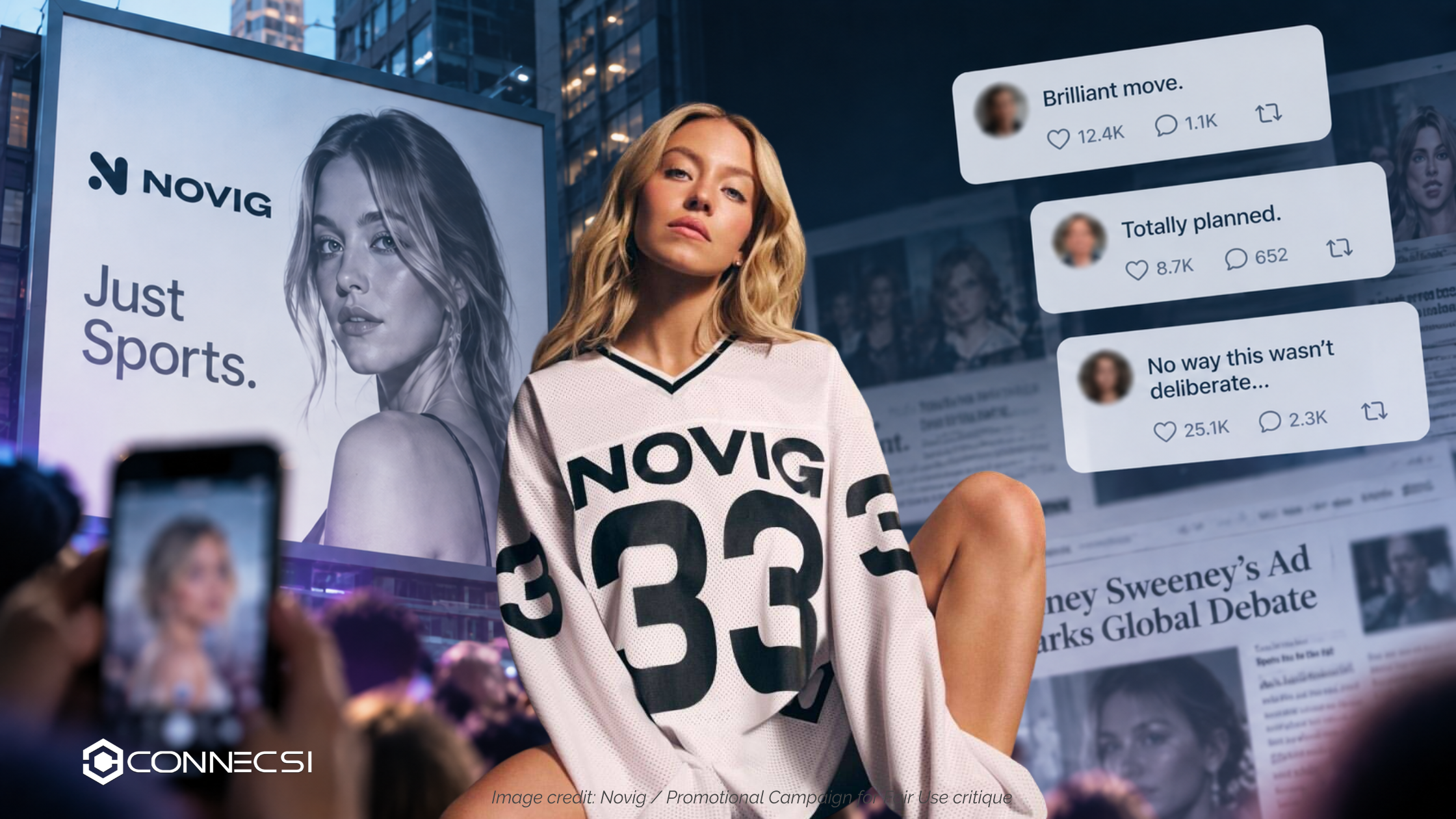
On this page
- Introduction
- Pro Tip
- The Sydney Sweeney Ad That Split the Internet
- Happy Accident or Deliberate Design?
- Why Controversy Is the Cheapest Media Buy
- Billions of Views. So What Did They Actually Return?
- When the Face of the Ad Owns Part of the Company
- What Could Happen Next for Novig
- What This Means for Brands Working With Creators
- Key Takeaways
- The Bottom Line
In mid-September 2026, Sydney Sweeney appeared in a minute-long social ad for Novig, a sports prediction market startup, wearing little more than a football and some strategically placed sports gear. The tagline was blunt: "No wars. No death. No politics. Just sports." Within days, the internet had split. The Sydney Sweeney ad passed 1.2 million likes on her Instagram alone, while a rival prediction market's campaign running the same week stayed under 55,000, according to Fortune's reporting on the campaign.
Almost as fast came the backlash. Female athletes accused the ad of sexualizing women and setting women's sports back. Commentators argued over whether it was empowering, cynical or simply effective. And Sweeney, rather than apologizing, doubled down.
Most of the debate since has been about whether the ad was offensive. The more interesting question is whether any of it was an accident. Was the outrage an unfortunate side effect of a bold creative idea, or was it the plan all along? Because if the controversy was designed, the backlash wasn't a problem for the campaign. It was the campaign. And if that's true, it raises a second question that matters to every brand paying for someone's influence: what did all that attention actually buy?
The quickest way to judge whether a viral moment was planned is to ask two questions: who controlled the creative, and has this happened before? The same test works before you sign any creator or celebrity. If their last three campaigns sparked a strong reaction, that's not luck. It's their pattern, and you're buying it.
The Sydney Sweeney Ad That Split the Internet
The reaction came from two directions at once. According to NBC Los Angeles, athletes including gymnast Gracie Kramer, water polo player Tilly Kearns and runner Mary McCarthy criticized the campaign on social media, arguing that it reduced women in sport to props at a time when female athletes are still fighting to be taken seriously. Others were more divided. WNBA player Sophie Cunningham said on her podcast that "morally, I think it's kind of weird," but added, "I don't think the ad was coming for women in sport."
Sweeney's response was telling. She didn't apologize or pull back. Her official statement framed the ad as "a fun idea," adding: "The concept is simple: cut through the noise and put the focus entirely on sports." She then posted Instagram stories featuring other celebrities and athletes who had posed nude for campaigns, a quiet way of saying she was in good company. That isn't the behavior of someone caught off guard by a reaction. It's the behavior of someone who expected it.
Happy Accident or Deliberate Design?
The evidence points firmly toward design. Start with the pattern. This is the second time in just over a year that a Sweeney campaign has turned into a national argument. Her 2025 American Eagle ad was built on a jeans-and-genes pun that practically invited debate, and it got one, dominating headlines for weeks. Anyone who watched that cycle knew exactly what a provocative Sweeney campaign could do.
Then look at who made the ad. Sweeney wasn't just the face of it. Fortune reports that she took equity in Novig rather than a standard fee and acted as creative director, choosing the music, guiding the camera angles and revising the script. Novig's CEO, Jacob Fortinsky, told Front Office Sports that she approached the company herself, and that the partnership "forces us into the national discourse." When the person who shaped every frame is also a part-owner, and has already seen how the last provocative campaign played out, it's hard to argue the reaction came as a surprise.
To be fair, nobody outside the room can know intent for certain, and bold creative ideas do misfire. But the pieces fit too neatly for coincidence: a repeat pattern, full creative control, a CEO describing the goal as entering the national conversation, and a star who responded to criticism by leaning in. The most likely reading is that the controversy wasn't a risk the campaign accepted. It was the mechanism the campaign relied on.
Why Controversy Is the Cheapest Media Buy
If the outrage was designed, the logic behind it is easy to follow. Novig isn't a household name, and it's competing against far better-funded rivals. Fortinsky described the partnership as a "very concentrated bet," with most of the company's marketing budget pointed at football season rather than spread across league sponsorships. "We're not interested in necessarily winning every bidding war," he said. For a brand in that position, the first problem isn't converting customers. It's being known at all.
Controversy solves that problem cheaply, because every critic who shares an ad to condemn it is also distributing it for free. Audience fit plays a part too. According to Forbes, men bet on sports at nearly double the rate of women, 42.1% versus 21.5%. Seen through that lens, the ad was never built for the people criticizing it. But cheap attention comes with costs that don't show up in a like count.
| Where controversy helps | Where it hurts |
|---|---|
| Cheap reach: critics distribute the ad for free | Attention fades once the news cycle moves on |
| Cuts through a crowded category | Can push away audiences the brand will want later |
| Signals clearly who the brand is for | The brand can lose control of its own story |
| Makes a small budget feel big | Ties brand reputation to one person's choices |
History suggests controversy only lasts when the product and the brand's values can carry the audience it attracts. Nike's 2018 Colin Kaepernick campaign faced boycott calls, yet online sales rose 31% over the following weekend, and the campaign became part of the brand's identity because it matched what Nike already stood for. Controversy can open the door. It can't keep anyone inside.
Billions of Views. So What Did They Actually Return?
This is where the story shifts from entertainment to business. Strip away the headlines and a celebrity like Sweeney is doing the same job as any creator a brand pays: lending her influence to move attention, perception and, eventually, sales. The scale is bigger, but the question is identical. What came back for the money?
Novig is private, so its numbers aren't public. American Eagle's are, and after more than a year they tell a nuanced story. The easy mistake is to collapse a campaign into one number. Fans point to impressions and call it a triumph. Skeptics point to quarterly sales and call it a flop. In reality, the return comes in layers, and as we've argued in why sales isn't the only KPI, a campaign can succeed at one layer and stall at another.
| Return layer | What it measures | American Eagle result |
|---|---|---|
| Awareness | Reach, impressions, earned media | 40 billion impressions |
| Brand | Followers, sentiment, cultural relevance | ~320,000 new social followers |
| Customers | New and returning buyers | 790,000 new customers in six weeks |
| Revenue | Comparable sales, margin | American Eagle brand comps +1% vs 2.1% expected |
The top three rows come from American Eagle's CMO, Craig Brommers, who told Marketing Brew the campaign was "worth every single dollar." The Sydney-branded denim jacket sold out in a day, and the stock jumped 25% after second-quarter earnings. By any measure of attention and brand image, it was a hit.
The bottom row is more sobering. eMarketer's analysis of third-quarter results found that the Sweeney and Travis Kelce campaigns together drew 44 billion impressions, yet comparable sales for the American Eagle brand rose just 1%, missing expectations. Sister brand Aerie, with no celebrity push, grew comps by 11%. About a year after the ad aired, Fortune notes, the stock had drifted back to roughly where it started. None of this makes the campaign a failure. Hundreds of thousands of new customers now know the brand. But it does show that attention and lasting return are different things, and that you only see the difference if you track the return over time rather than in the first week.
When the Face of the Ad Owns Part of the Company
The Novig deal adds a twist American Eagle didn't have. Because Sweeney holds equity, she isn't just selling someone else's product. She's building the value of something she partly owns. That's a growing model among top talent, and it has real upside. The celebrity's incentives are tied to the company's long-term success rather than a one-off fee, which tends to produce more committed promotion, and the brand preserves cash by paying partly in ownership. We saw the same dynamic in the creator-owned brand playbook behind Prime.
The risks are just as real. Brand strategist Shruti Saini warned in Fortune that Novig could become "a supporting character in its own advertising," with the conversation centered on Sweeney rather than the product. The brand also takes on key-person risk: its reputation is now tied to one individual's choices, in both directions. And handing a star creative control means handing over some of your own. It also sharpens the design question. A paid spokesperson follows a brief. A part-owner with creative control writes it, and every provocative choice in the Novig ad was, in a real sense, an owner's decision.
What Could Happen Next for Novig
The pattern from comparable campaigns points to three broad outcomes. In the first, the spike fades: attention peaks during football season, sign-ups follow, and activity drops once the novelty wears off. In the second, the spike becomes a brand: the campaign gives Novig a clear identity as the "just sports" alternative, and enough new users stay to justify the bet. In the third, the backlash sticks, and the controversy becomes the thing people remember instead of the product.
The signals that will separate these outcomes aren't the ones making headlines. Likes and views are already settled. What matters now is whether new users are still active after the season ends, whether search interest in the brand holds above its pre-campaign level, and whether public sentiment settles or keeps souring. These are scenarios, not forecasts, but they're the same signals any brand should watch after a campaign built on someone's influence.
What This Means for Brands Working With Creators
Most brands will never sign a Sydney Sweeney, but the underlying economics are the same at every level. Whether you're paying a celebrity or a creator with 20,000 followers, you're buying influence, and influence only pays off if it turns into something that lasts. The Sweeney campaigns offer four lessons that apply at any budget.
First, understand a creator's pattern before you sign. If controversy follows them, it will follow your brand too, which is why it pays to vet creators properly before committing. Second, choose for fit, not raw reach. The Novig ad works for its core audience precisely because it ignores everyone else, and for most brands a group of well-matched smaller creators spreads risk better than one big name, as we explain in micro vs macro influencers. Third, borrow the principle behind equity deals without the equity: performance bonuses and revenue share tie what a creator earns to what the brand actually gains, and they're easier to set up than most brands think when negotiating brand deals.
Fourth, and most often skipped, review every partnership after it ends. Judge it on every layer of return, not just the loudest number, and decide deliberately whether to continue, renegotiate or stop. Treating creator spend like a portfolio, with more budget toward partners who deliver lasting results and less toward those who only deliver a spike, is how attention turns into business value.
- The Sydney Sweeney ad for Novig passed 1.2 million likes and sparked a backlash from female athletes within days.
- A repeat pattern, full creative control and equity ownership all suggest the controversy was designed, not accidental.
- Controversy is the cheapest media buy, but it only lasts when the product and brand values can carry it.
- American Eagle's campaigns drew 44 billion impressions, yet brand comparable sales grew just 1%.
- Celebrity equity deals align incentives but add key-person risk and can make the brand a supporting character.
- At any budget, brands should vet a creator's pattern, choose for fit and review every partnership on lasting return.
The Bottom Line
Whether you read the Novig ad as bold or cynical, it was almost certainly no accident. Sydney Sweeney has become one of the most effective attention engines in advertising, and she now helps design the controversy as much as she stars in it. But attention is the easiest part of a campaign to buy and the hardest to keep. American Eagle showed that billions of impressions and hundreds of thousands of new customers can still translate into modest sales and a stock that drifts back to where it started. Novig's outcome will depend on the same thing: not how many people saw the ad, but how many are still there when football season ends.
The brands that win from influence, at celebrity scale or creator scale, aren't the ones with the loudest campaign. They're the ones that know what each partnership actually returned and act on it. That's the thinking behind Connecsi's True Impact Score, which weighs a creator's performance, reliability and economics into a clear recommendation to continue, renegotiate or end a partnership. If you'd rather have that analysis done for you, talk to our team about your next campaign.
Editorial note: Brand names, logos and trademarks referenced in this article belong to their respective owners. Connecsi is not affiliated with or endorsed by the brands, creators or individuals discussed unless explicitly stated otherwise. References are made for editorial, educational, analytical and commentary purposes. Figures are drawn from the publicly reported sources linked above as of September 2026. Featured image: [PHOTO CREDIT LINE: see metadata].
More insights for you.
What Your Favorite Creators Actually Earn: Inside the Highest Paid Creators of 2026
MrBeast made $300M. Another creator made $31M from just 10 million followers. Here's what the top 10 actually sell, and the do's and don'ts to borrow.

Your UGC Portfolio: You Need 5 Videos Before Any Brand Will Pay You
Most new creators pitch with nothing attached and blame a saturated market. Five sample videos changes every conversation. Here's exactly what to shoot.

Influencer Marketing Attribution: Why You Still Can't Prove What Worked
Your finance lead asks which sales came from creators. Most brands can't answer. Here's why the tracking breaks, and the stack that actually holds up.
Fresh insights.
Straight to your inbox.
- Creator partnerships
- Campaign guidance
- Industry insights